Table of Contents
Meta Quest 3 vs Meta Quest 2: A Comprehensive Comparison
The Meta Quest 3 has arrived, and it’s generating a lot of buzz among VR enthusiasts. Whether you’re an existing Quest 2 owner contemplating an upgrade or someone who has been holding out on buying a VR headset, it’s essential to understand how the Quest 3 stacks up against its predecessor, the Quest 2. In this article, we’ll delve into a detailed comparison of the Meta Quest 3 and Meta Quest 2, exploring their features, design, price, controllers, and overall experience. By the end, you’ll have a clear understanding of the differences between these two popular VR headsets.
Price and Availability
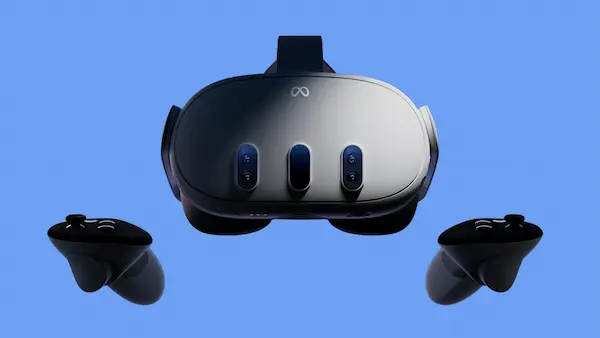
Let’s start by examining the price and availability of the Meta Quest 3 and Quest 2. The Quest 2 has seen some fluctuations in its pricing over the past couple of years. Initially launched at $299 in 2020, its price was later raised to $399. However, during the original Quest 3 preview, the Quest 2’s price dropped back to its original $299.
On the other hand, the Quest 3 is available for pre-order starting at $499. While the base model of both headsets features 128GB of storage, the Quest 3 offers a higher-end option with 512GB storage at a price point of $649. While the Quest 2’s lower price certainly makes it an attractive option, considering the upgrades we’ll discuss below, the Quest 3 at $499 is still a great value proposition.
Design and Aesthetics
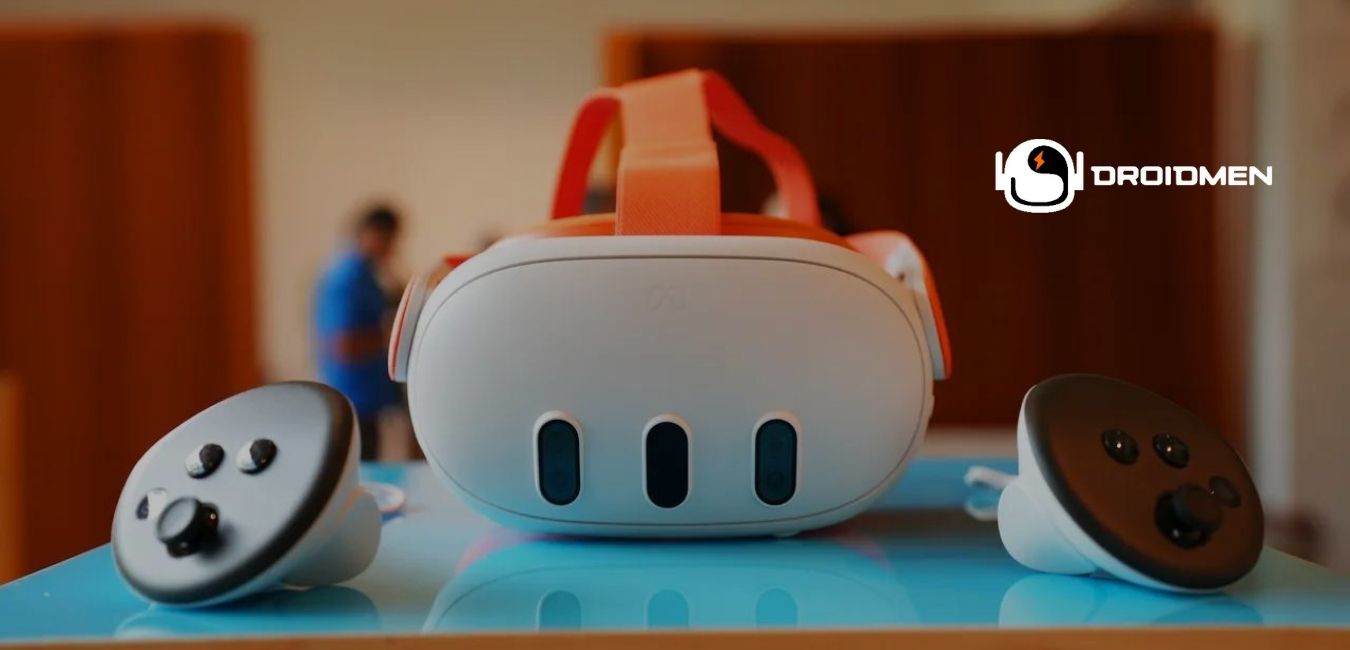
When it comes to design, both the Meta Quest 3 and Quest 2 share a similar white aesthetic, with a matte plastic body. However, there are notable differences between the two versions. The Quest 3 has undergone significant slimming down, making it 40% slimmer than its predecessor. Despite the slimmer profile, it retains the same basic lines as the Quest 2.
The Quest 2 features four indented areas, one at each corner, which house the trackers for positioning. It also includes a volume rocker on the top of the headset and a power button on the right side. To enhance comfort and fit, it is recommended to purchase the $59.99 Elite Strap alongside the Quest 2. Additionally, the Quest 2’s black foam lining, which can get sweaty during extended VR sessions, now comes with a silicon cover that is easier to clean.
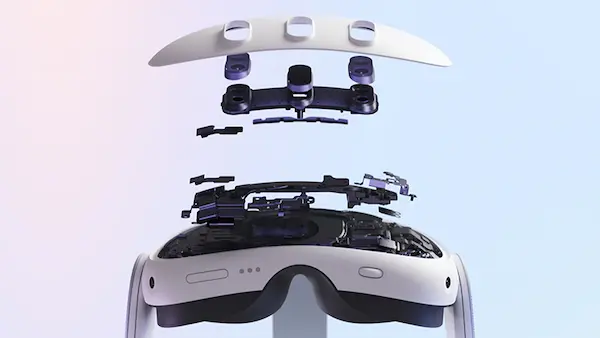
In comparison, the Quest 3 adds three sensors to the front of the headset, which may give it a slightly odd appearance compared to the minimalist look of the Quest 2. According to Meta, the fabric band of the Quest 3 is more robust, potentially eliminating the need for additional accessories like the Elite Strap. The Quest 3 also moves the volume control to the bottom of the headset and introduces a wheel to adjust the inter-pupillary distance (IPD) setting, eliminating the need to remove the goggles for adjustment.
From an aesthetic standpoint, the Quest 2 may have the edge, but the Quest 3’s thinner profile and potential improvements in usability and comfort make it a game-changer.
Display and Resolution
Now, let’s dive into the display and resolution capabilities of the Meta Quest 3 and Quest 2. The Quest 3 boasts a display resolution of 2,064 x 2,208 pixels per eye, while the Quest 2 offers a slightly lower resolution of 1,832 x 1,920 pixels per eye. This means that the Quest 3 provides a crisper and more detailed visual experience, which can greatly enhance the immersion and overall enjoyment of games and applications.
Chipset and Performance
Under the hood, both the Meta Quest 3 and Quest 2 are powered by Qualcomm Snapdragon XR2 chipsets. However, the Quest 3 features the newer Qualcomm Snapdragon XR2 Gen 2 chipset. While specific details about the Gen 2 chipset are yet to be revealed, it is expected to offer improved performance and efficiency compared to its predecessor. This means that the Quest 3 has the potential to deliver smoother gameplay, faster loading times, and better overall performance.
Storage and RAM
When it comes to storage and RAM, the Quest 3 offers two options: 128GB and 512GB. In contrast, the Quest 2 comes with either 128GB or 256GB of storage. While the Quest 2’s 256GB option is priced at $349, the Quest 3’s 512GB version comes with a price tag of $649. The exact amount of RAM in the Quest 3 is yet to be announced, but the Quest 2 features 6GB of RAM.
Tracking and Controllers
Both the Meta Quest 3 and Quest 2 utilize inside-out tracking, allowing for a seamless and immersive VR experience without the need for external sensors. While the Quest 2 features four cameras for tracking, the Quest 3 takes it up a notch with six cameras, potentially improving the accuracy and precision of tracking.
In terms of controllers, the Quest 3 builds upon the design of the Quest 2’s third-generation Oculus Touch controllers. The Quest 3 controllers remove the loop at the top of the Quest 2 controllers, but retain the middle-finger and index-finger triggers, capacitive joystick, touchpad, and face buttons. It is expected that the Quest 3 controllers will offer improved haptics, providing users with more tactile feedback, similar to the Quest Pro controllers.
Experience: VR vs. Mixed-Reality
Perhaps the most significant difference between the Meta Quest 3 and Quest 2 lies in the experience they offer. While the Quest 2 is primarily a VR headset, the Quest 3 is a mixed-reality AR/VR headset. The Quest 3’s full-color passthrough mode, enabled by its new sensors, allows for a blend of virtual and real-world experiences. In comparison, the Quest 2 only offers a grayscale look at reality, which is primarily useful for avoiding obstacles.
The addition of mixed reality to the Meta Quest 3 opens up a whole new realm of possibilities. Users can engage in productivity tasks, such as using their actual laptops while augmenting them with virtual displays. Games can also overlay on reality, creating virtual tabletop gaming environments where players can roll dice and witness the results on a virtual board placed on their physical table, thanks to the depth sensor in the Quest 3.
While the potential for mixed reality is exciting, it is important to note that the technology is still in its early stages. The “killer app” for VR is yet to arrive, and the same can be said for AR. However, with Apple also entering the mixed-reality market this year, we can expect significant advancements in the coming years.
Outlook

In conclusion, the Meta Quest 3 offers several notable improvements over the Quest 2. The mixed-reality component, thinner profile, higher resolution lenses, upgraded chipset, improved controllers, and potential for enhanced gaming and productivity experiences make the Quest 3 an enticing option. However, whether it is worth the $200 price difference compared to the Quest 2 depends on individual preferences and usage patterns.
If mixed reality doesn’t appeal to you, and you primarily engage in shorter VR sessions where the weight difference isn’t a significant factor, the Quest 2 may be the right choice for you. At a lower price point, you can allocate the saved money towards VR apps and games. However, if you’re a dedicated Quest 2 user and want the best VR experience available, the Quest 3 is hard to pass up. Selling your Quest 2 can help offset some of the cost of upgrading.
Ultimately, the choice between the Meta Quest 3 and Quest 2 depends on your specific needs, preferences, and budget. Whichever headset you choose, both the Meta Quest 3 and Quest 2 offer incredible VR experiences and will undoubtedly provide hours of immersive entertainment.