
Table of Contents
Steam Deck OLED
In the ever-evolving world of handheld gaming, the Steam Deck has made a significant impact since its launch. With continuous software updates, an expanding catalog of games, and useful accessories, Valve’s Linux-powered PC has established itself as more than just a passing trend. Now, Valve has introduced the Steam Deck OLED, a hardware revision that addresses the criticisms of the original model with surgical precision. In this article, we will delve into the improvements offered by the Steam Deck OLED and explore why it is worth considering for avid gamers.
A Brighter Display

The most apparent upgrade in the Steam Deck OLED is its new OLED screen. While the resolution remains the same at 1200×800 pixels, the OLED display enhances the visual experience in several significant ways. With a larger size of 7.4 inches diagonally, compared to the previous 7-inch LCD screen, the Steam Deck OLED offers a more immersive gaming experience. The OLED screen is HDR certified, boasting a peak brightness of 1000 nits and a wide color gamut that covers 110% of the DCI-P3 color spectrum.
Additionally, the refresh rate has been improved to 90Hz, providing smoother gameplay compared to the original 60Hz display. The difference in visual quality is evident when comparing the vibrant neon streets of Cyberpunk 2077 and the rich blacks found in shadowy areas. Even in SDR content, the OLED screen presents excellent clarity, making it a noticeable and worthwhile upgrade.
A Familiar Design with Subtle Enhancements
When holding the Steam Deck OLED, users will find a design that remains largely unchanged from the original model. However, a few subtle enhancements contribute to an improved overall experience. The power button now features a neat orange accent, adding a touch of visual appeal. Additionally, the thumbsticks have been redesigned to be all-black, removing the previous gray accents found on the LCD model.
The handheld device has also shed 30 grams of weight, making it 5% lighter than its predecessor. Although this may seem like a small difference, it is significant for those who spend extended periods gaming. Despite these changes, the Steam Deck OLED maintains its comfortable grip, excellent ergonomics, and a wide range of control options, including standard gaming inputs, dual touchpads, a touch-sensitive screen, and programmable back buttons.
Improved Performance and Battery Life
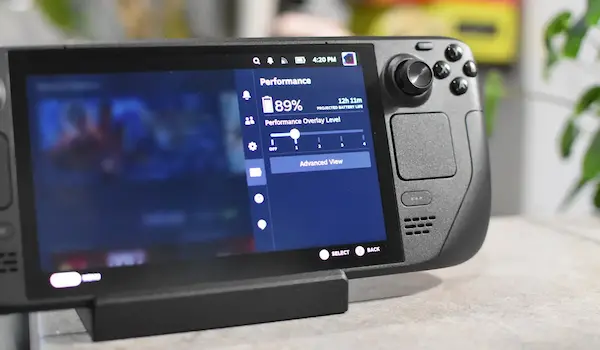
While the Steam Deck OLED offers the same gaming performance as its predecessor, there are notable improvements in terms of power consumption and battery life. Valve’s engineers have utilized a thinner OLED panel, allowing for a larger 50 Watt-hour battery compared to the previous 40 Watt-hour battery. Combined with an updated AMD APU that is more power-efficient, the Steam Deck OLED achieves the same level of performance while using less power and running cooler. As a result, the OLED version lasts approximately one hour longer than its predecessor.
The OLED screen itself consumes less power, even with higher brightness and refresh rates, contributing to a 30-50% improvement in battery life. In real-world testing, the Steam Deck OLED showcased a remarkable 66% improvement, significantly extending gameplay time before requiring a recharge. Furthermore, the redesigned thermals and larger fan ensure that the Steam Deck OLED remains noticeably cooler during operation.
Enhanced Connectivity and Other Improvements
Valve has made several other enhancements to the Steam Deck OLED that contribute to an overall improved user experience. The OLED model supports Wi-Fi 6, allowing for faster downloads when connected to a compatible router. Additionally, Bluetooth connectivity has been enhanced with a dedicated radio, resulting in better overall performance. The haptics, trackpads, and touch screen have also been improved, with the touchscreen exhibiting greater responsiveness, making it easier to interact with small buttons and type using the on-screen keyboard. While these individual improvements may seem minor, they collectively contribute to an enhanced overall user experience with the Steam Deck OLED.
A Highly Capable Handheld PC

In terms of gaming performance, the Steam Deck OLED remains a highly capable handheld PC. In various tests, the results matched those of the original Deck within a 3fps margin. Although there have been a number of competing handhelds released since the original Steam Deck, the OLED version still offers impressive power, especially when considering its competitive pricing compared to Windows-powered alternatives.
The smoothness of the SteamOS interface provides a convenient and enjoyable user experience, surpassing that of many competing devices. However, it is important to note that playing games that are not compatible with SteamOS can be challenging. While some third-party workarounds exist for platforms like the Epic Games Store, GOG, and itch.io, compatibility issues may arise, particularly with games that utilize Easy Anti-Cheat. Installing Windows on the Steam Deck is an option, but it comes with its own set of challenges and sacrifices the quality-of-life user experience provided by SteamOS.
Conclusion
In conclusion, the Steam Deck OLED offers a range of improvements over its predecessor, making it a compelling choice for handheld gaming enthusiasts. The OLED screen provides a brighter and more vibrant visual experience, while the subtle design enhancements and improved battery life contribute to a more comfortable and extended gaming session. With its continued gaming performance and the convenience of SteamOS, the Steam Deck OLED remains a highly capable handheld PC. While compatibility challenges may arise when playing non-Steam games, the overall user experience and competitive pricing make the Steam Deck OLED a worthwhile investment for gamers looking for a portable gaming solution.