As technology continues to reshape many facets of our lives, the educational sector isn’t left behind. Two of the most innovative tools changing the way students learn in colleges and universities worldwide are Virtual Reality (VR) and Augmented Reality (AR). Their immersive and engaging capabilities provide students with experiences that were once thought to be years away from being implemented.
Table of Contents
What is AR and VR?
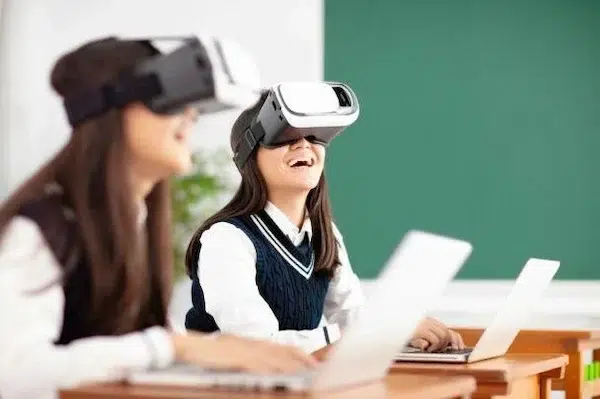
Virtual Reality (VR) allows users to step into a computer-generated environment, engaging in an interactive experience that feels astonishingly lifelike, thanks to specialized headsets and motion sensors. For those looking to understand these technologies more deeply, websites like solution copywriting offer extensive resources to assist students in unraveling the intricacies of VR and AR.
Augmented Reality (AR), a close kin to VR, seamlessly overlays digital content onto our real-world surroundings. This augmentation can be achieved through devices we use daily, such as smartphones and tablets, or through specialized AR glasses. Instead of constructing an entirely new reality like VR, AR magnifies our current reality, providing a layer of enriched digital information to enhance perception and interaction.
Beyond their impressive tech specifications, AR and VR have immense educational potential. They render abstract concepts palpable, transport learners to faraway phenomena, and gift students with experiences that fortify distance learning. With online platforms and resources, students can maximize their understanding and application of these technologies, reaffirming the belief that AR and VR are the future linchpins of educational evolution.
The Transformative Impact of VR and AR on College Education
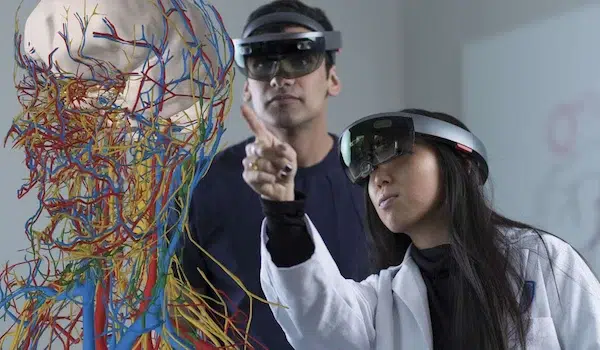
Incorporating technology into education has always promised learners a brighter, more inclusive future. However, including Virtual Reality (VR) and Augmented Reality (AR) is not just another step; it’s a giant leap. These technologies, with their immersive and interactive capabilities, offer unprecedented advantages. Let’s delve deeper into how VR and AR revolutionize various facets of college education.
Improved Interactivity
Traditional educational methods often depend on passive learning, with students reading textbooks or listening to lectures. VR and AR encourage active participation. For instance, instead of merely reading about ancient Rome, students can walk virtually through it, interacting with its monuments and people. This immersive experience allows learners to feel part of the historical period, deepening their connection and curiosity. Furthermore, this kind of interactivity enables students to ask questions in real time, gaining immediate insights and clarifications.
Improved Accessibility
Physical limitations, such as distance to world-class institutions or laboratories, can be transcended with VR and AR. A student in Asia can now participate in a virtual lab at a top U.S. university without leaving home. This democratizes education, providing opportunities for those who previously couldn’t access these resources. It also reduces costs related to travel and accommodation, making premium educational experiences more affordable.
Applied Learning
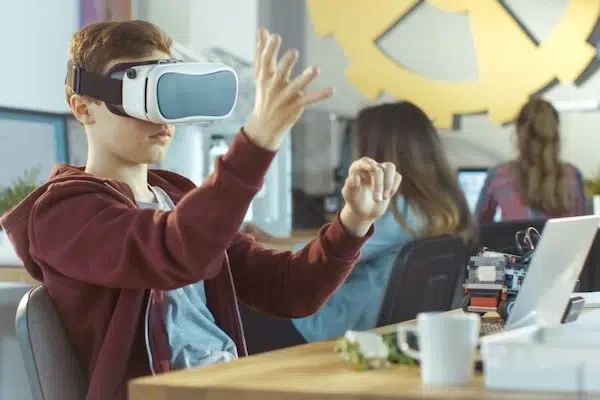
AR and VR allow students to apply theoretical knowledge immediately. Engineering students, for instance, can build virtual prototypes, while medical students can conduct virtual surgeries, honing their skills before they touch real patients. This real-time application enhances the learning curve, as students get feedback and can iterate their actions. It also bridges the gap between theory and practice, making academic knowledge more relevant and applicable.
A Safe Learning Environment
Certain fields require high-risk training, like chemistry or medicine. With VR and AR, students can practice without the risk of real-world consequences, ensuring their safety while they learn. This not only fosters confidence but also encourages experimentation and creativity. By removing the fear of making mistakes, students are empowered to explore various approaches and solutions.
Better Knowledge Retention
Engaging multiple senses makes learning memorable. The immersive nature of VR and AR means that students are not just seeing but also interacting, leading to better retention and understanding. Research has shown that immersive learning experiences significantly improve memory recall. Furthermore, creating emotional and multi-sensory experiences makes students more likely to recall information even after extended periods.
Better Collaboration
Virtual classrooms or collaborative AR and VR platforms mean that students worldwide can learn and work together, breaking down geographical barriers and fostering a global perspective. This promotes cultural exchange, broadens horizons, and enhances teamwork skills. In such environments, students are exposed to diverse viewpoints, which fosters critical thinking and empathy.
Better Learning Outcomes
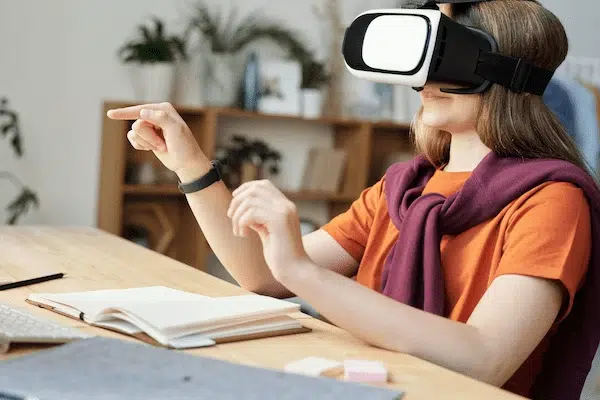
With the increased interactivity, accessibility, and engagement of VR and AR, students tend to understand and retain complex topics. This often leads to improved grades and a deeper understanding of the subject matter. Beyond academic achievements, the hands-on experiences equip students with practical skills, making them more prepared for the challenges of the real world and the job market.
Individualized Learning
Every student learns differently. AR and VR can adapt to each student’s learning pace and style, offering custom-tailored experiences that cater to individual needs and strengths. With intelligent algorithms, these technologies can identify areas where a student struggles and provide additional resources or exercises. This personalized approach ensures that no student is left behind and each can achieve their full potential.
Final Thoughts
The evolution of AR and VR in education is just the beginning. As these technologies become more advanced and integrated, we can expect even more significant transformations in how education is delivered and experienced. Colleges and universities that adopt these technologies early will be at the forefront of the next educational revolution, providing their students with unparalleled learning experiences.
BIO
Mary Herd is a technology enthusiast interested in the intersection of digital innovations and education. With a background in educational technology research, Mary has penned numerous articles on the transformative power of AR and VR in learning environments. Continuously exploring the frontiers of tech-driven pedagogies, her writings provide readers with insightful perspectives on the future of education.