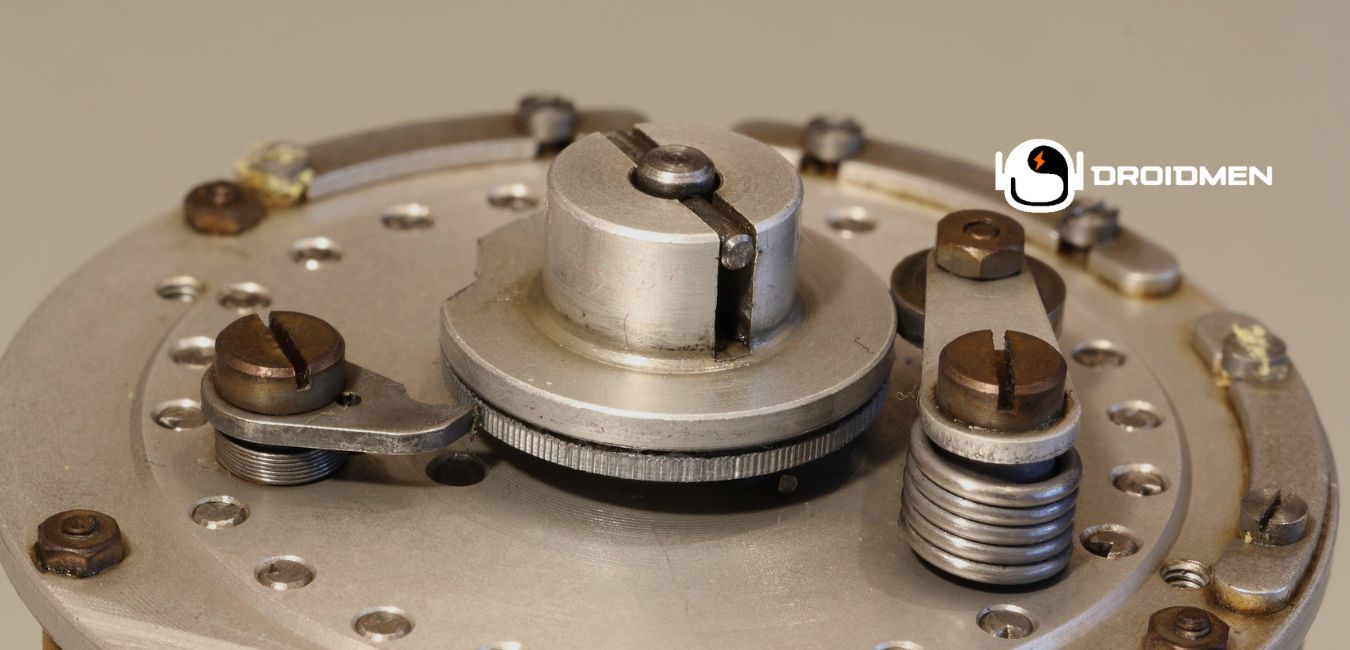
In industrial environments, precision drives performance. From automated assembly lines to advanced robotics, motion control systems must deliver consistent, real-time feedback. A small but critical component in this chain is the rotary encoder—a sensor that converts mechanical motion into digital signals.
Choosing between absolute and incremental rotary encoders involves more than technical specifications. It requires careful consideration of system needs, operational impact, and long-term performance.
Let’s explore how both encoder types function and how their capabilities align with your operational and financial goals.
Table of Contents
Understanding Rotary Encoders
Rotary encoders play a key role in motion control systems across industries like manufacturing, packaging, robotics, and medical devices. They ensure that machines operate with accuracy, safety, and consistency.
For business leaders and procurement teams, encoders may seem like a small line item—but the right selection can impact performance, reduce downtime, and optimize costs across the entire lifecycle of a machine.
Understanding the two main types—absolute and incremental—is essential for making informed purchasing and system design decisions.
Absolute Vs. Incremental Encoders: Strategic Differences
Both encoders serve the same goal: tracking shaft rotation. However, their data output, integration complexity, cost structure, and operational behavior differ in ways that can significantly impact system performance and scalability.
Absolute Encoders
- Deliver a unique digital value for each shaft position.
- Retain position data even after a power loss.
- Reduce system startup time—no homing sequence required.
- Often used in applications that require safety, precision, and reliability, such as medical equipment, robotics, and high-end automation.
Incremental Encoders
- Output a series of pulses to indicate shaft movement.
- Lose position information after shutdown or power loss.
- Require a homing sequence at startup to re-establish position.
- Preferred for basic applications where relative motion tracking is sufficient and cost control is a priority.
Key Business Considerations When Choosing An Encoder
Choosing the right encoder involves more than technical compatibility. You must align the encoder’s performance with broader business drivers: total cost of ownership, system downtime, production speed, and long-term maintenance.
1. Operational Downtime
- Absolute encoders reduce unplanned downtime by resuming operation without homing.
- Incremental encoders require reinitialization, which adds startup time.
2. Cost Of Integration
- Absolute encoders often involve more complex wiring and higher upfront cost.
- Incremental encoders are faster and cheaper to install, making them ideal for high-volume, cost-sensitive applications.
3. Lifecycle Maintenance
- Absolute encoders provide greater system resilience and reduce operator intervention.
- Incremental systems may need more frequent calibration and resets.
4. Compliance And Safety
- In regulated industries (like medical or aerospace), absolute encoders offer traceability and position certainty, reducing compliance risks.
How To Make The Right Decision?
To select the right encoder, evaluate not just the system’s functional needs—but also how the encoder’s performance aligns with your business objectives.
- Assess risk tolerance: What are the costs of position loss or downtime in your operation?
- Analyze total cost of ownership: Consider both initial cost and long-term savings from reduced maintenance or improved uptime.
- Review installation complexity: Will advanced setup affect rollout timelines or labor requirements?
- Match encoder capabilities with project goals: Are you prioritizing speed, safety, precision, or scalability?
This process ensures you don’t over- or under-spec the encoder and that the investment aligns with both short-term goals and long-term business impact.
Conclusion
Rotary encoders are small components that play a big role in system performance and reliability. Choosing between absolute and incremental types goes beyond technical needs—it supports broader business goals. Absolute encoders offer precise position tracking, even after power loss, making them suitable for critical systems.
Incremental encoders provide a simple, cost-effective way to track motion in less demanding applications. Aligning encoder features with operational goals helps reduce downtime, manage costs, and improve long-term efficiency, supporting productivity and overall business performance.