Quick Answer: Headless mode on a drone is a beginner-friendly flight mode where the drone’s direction of movement remains consistent relative to the pilot’s position, regardless of which way the drone is facing.
Drones have dramatically transformed how we explore the skies and capture aerial visuals. Whether you’re a hobbyist or a professional, mastering basic flight modes is essential for control and safety. One of the most useful beginner-friendly features is headless mode—but what exactly does that mean?
Table of Contents
What Is Headless Mode On A Drone?
Headless mode—also called Carefree Mode—allows you to fly a drone without worrying about which direction its “nose” is facing. Normally, if a drone is turned around, pushing forward on your controller might send it backward relative to you. In headless mode, pushing forward always makes the drone move away from you, and pulling back always brings it closer—regardless of its orientation.
This mode is especially helpful for new pilots who haven’t yet developed the spatial awareness needed for traditional flight modes. It helps reduce confusion and allows users to focus on the basics of directional movement.
How Does Headless Mode Work?
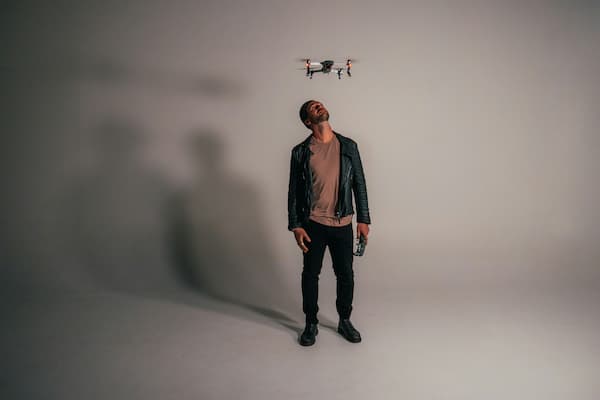
When headless mode is activated, the drone uses a compass and gyroscopic sensors to lock in its orientation relative to the controller at takeoff. From that point on, your control inputs are interpreted based on your position—not the drone’s front.
Example: If you’re standing still and the drone turns 180°, forward will still send it away from you. Think of it like controlling a car from a bird’s-eye view, rather than sitting in the driver’s seat.
In technical terms, the drone creates a virtual axis based on its initial alignment with the controller. This axis becomes the consistent directional reference for all input commands.
When And Why Should You Use Headless Mode?
Headless mode is ideal for:
- Beginners: It simplifies flying by removing the need to track orientation.
- Long-distance flights: Helps you navigate even when the drone is far away or hard to see.
- FPV flights: Maintains control during fast movements and tricky angles.
- Disorientation recovery: If you lose visual orientation, toggling headless mode can help you regain control.
- Flying in poor lighting or low visibility: Headless mode can help when visual orientation cues are lacking.
This makes headless mode a go-to option for new pilots looking for confidence in early flights. It’s not just a beginner’s crutch—it’s a smart way to reduce accidents and build muscle memory.
When To Avoid Headless Mode
While headless mode is beginner-friendly, it’s not suitable for every situation.
- Learning limitations: Relying too much on headless mode can slow down your ability to fly in manual mode.
- Advanced maneuvers: Tricks and flips often require orientation awareness.
- Environmental conditions: Headless mode doesn’t account for wind or signal interference.
- Racing or professional piloting: Competitive and precision flying requires real-time orientation awareness.
If your long-term goal is to become a skilled drone pilot, it’s important to gradually transition to manual control to understand your drone’s full potential.
How To Activate Headless Mode
- Check your drone model: Look for a button labeled “Headless Mode” on the controller or in the mobile app.
- Calibrate the drone: Place it on a level surface and follow manufacturer instructions to calibrate the compass and sensors.
- Enable headless mode: Activate via controller or app. A beep, light, or on-screen prompt will confirm it’s active.
Some drones also allow setting a new orientation mid-flight. Be cautious with this function as it resets the reference point, which may disorient the user.
Tips For Using Headless Mode Safely And Effectively
- Start in open areas: Avoid trees, buildings, and crowds.
- Understand orientation anyway: Knowing front/back behavior helps if you switch to manual.
- Combine modes: Transition between headless and manual to build skills.
- Monitor battery life: Headless mode doesn’t save power—always track flight time.
- Stay alert: Headless mode won’t avoid obstacles or handle wind automatically.
- Test responsiveness: Periodically test control responses to ensure orientation hasn’t drifted.
- Keep firmware updated: Updated software can improve sensor accuracy and reduce glitches.
Headless Mode Vs. Standard Mode: A Quick Comparison
| Feature | Headless Mode | Standard Mode |
|---|---|---|
| Control relative to pilot | Yes | No |
| Orientation required | No | Yes |
| Best for | Beginners, FPV, long-distance | Advanced users, precise control |
| Support for tricks/flips | Limited | Full |
| Adaptability in wind | Low | Moderate to High |
| Skill development | Slow | Fast |
Frequently Asked Questions About Headless Mode On Drones
1. Do All Drones Have Headless Mode?
No. All drones don’t have headless mode. It’s common in beginner and mid-tier consumer drones (e.g., Holy Stone, Syma, Potensic). High-end models like DJI may not use it, favoring GPS-based modes instead.
2. Is Headless Mode Good For Filming?
Headless mode can help maintain simple directional control, but it’s not a substitute for gimbal stabilization or intelligent tracking. If your focus is cinematic footage, use other flight aids in conjunction with headless mode.
3. Will Wind Affect Flight In Headless Mode?
Yes. Wind affects flight in headless mode. Headless mode doesn’t stabilize for wind or environment—you still need to correct it manually.
4. Can I Switch Between Headless And Standard Mode Mid-Flight?
Most modern drones allow switching between headless and standard mode mid-flight, but sudden changes in orientation reference can cause momentary disorientation. Use caution.
5. Does Headless Mode Use GPS?
Headless mode does not use GPS directly. Most headless modes rely on compass and gyroscopic data, though some advanced drones integrate GPS for stability.
Final Thoughts
Headless mode can be a lifesaver for new pilots or anyone struggling with orientation. It’s not about replacing skill—it’s about giving users a safer, simpler way to get started. Just don’t treat it as a crutch—use it to build confidence while learning the ropes of manual flying.
Over time, transitioning between headless and standard mode will give you a more complete skill set and better control over your drone in all situations.
For more tips, drone guides, and flight techniques, check out our articles.