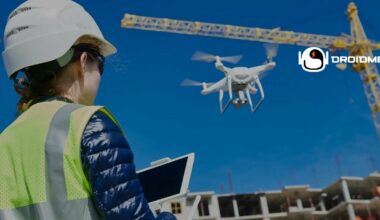
Imagine looking up and seeing drones, not just flying for fun but working on farms! These aren’t toys; they’re game-changers for farmers. Drones now do more than take great photos.
They help farmers grow food in smart, new ways. From spotting sick plants to measuring how crops grow, drones play a big role in today’s farms.
Welcome to the world of sky-high farming, where agriculture meets cutting-edge tech. Get ready to dive into how these flying machines are reshaping how we think about farming.
Table of Contents
Types of Agriculture Drones
Today, agriculture drones play a vital role in farming. Here are 5 types of agriculture drones.
Fixed-Wing Drones
Fixed-wing drones look like small airplanes. They have long, straight wings and can cover large areas of land quickly. These drones are great for mapping fields and checking the health of crops from above.
They can fly for a long time, but they need a clear area to take off and land. Farmers use these drones to get a big picture of their fields.
Rotary Blade Drones
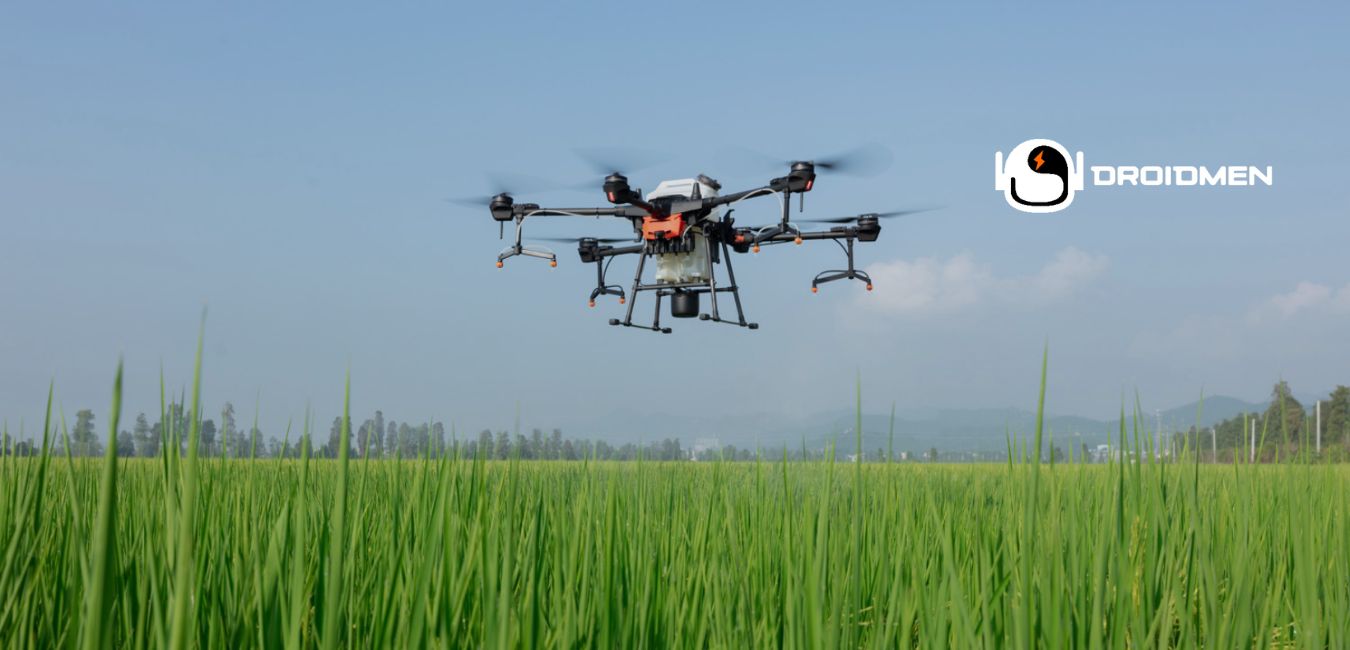
Rotary-blade drones have spinning blades like helicopters. These drones can hover in one spot, change directions quickly, and take off or land in small areas.
They work well for getting close-up views of crops and can even spray pesticides. Farmers choose these drones when they need to look at specific field parts or do precise work.
Hybrid Drones
Hybrid drones combine features from both fixed-wing and rotary-blade drones. They can fly long distances and hover in one spot.
These versatile drones are a good choice for farmers who need to do different tasks with one drone. They can map out a field, take a close look at crops, and even carry small items.
VTOL (Vertical Takeoff and Landing) Drones
VTOL drones have a unique design that allows them to take off and land vertically, just like a helicopter. This ability makes them perfect for farming areas with limited space.
Farmers use VTOL drones to get a bird’s eye view of their fields, check on the health of crops, and even spray pesticides.
These drones can hover over specific areas, making it easy to focus on trouble spots. VTOL drones save time and energy, making them a popular choice for many farmers.
Livestock Monitoring Drones
These drones help farmers keep an eye on their animals. With livestock monitoring drones, farmers can track the location of their animals, check if they are healthy, and ensure they are safe.
These drones are like flying shepherds, helping to guard and care for livestock. They can fly over large areas quickly, making it easy to watch over many animals at once.
Livestock monitoring drones have cameras and sensors that send information back to the farmer. This technology helps farmers make better decisions about the care of their animals.
The Rise Of Drones In Agriculture
Drones are flying high in farming! Not so long ago, farmers walked fields, checked plants, and looked for pests with their own eyes.
Today, many farmers use drones. These flying machines give a bird’s-eye view of the field in just minutes.
So, what’s the big deal about drones?
Quick Checks
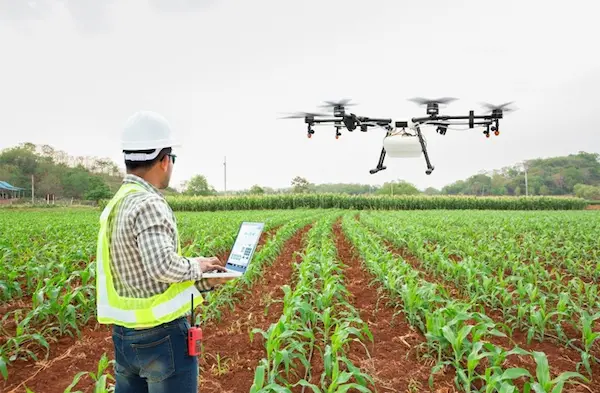
Drones make it simple to check on crops. A farmer can send a drone to fly over fields and take pictures or videos. This helps the farmer see if the crops are healthy or need water or fertilizer.
Drones can also spot pests or diseases early, so the farmer can act fast to fix the problem. This means the farmer doesn’t have to walk or drive through the field, saving time and effort.
Saving Money
Using drones helps farmers save money. Drones can spray fertilizer or pesticides only where needed instead of over the whole field.
This means the farmer uses less fertilizer and pesticide, which saves money. Drones also help find the best spots to plant crops, which can lead to better yields. All these savings add up over time.
Better Harvests
Drones help farmers get better harvests. They can fly over a field and collect data about the crops.
This data helps the farmer make smart decisions about when to plant, what to plant, and how to take care of the crops. As a result, the crops grow better, and the harvest is bigger and healthier.
Safe Watch
Drones help keep farms safe. They can fly around and check for problems like trespassers or animals that might harm the crops.
When there is a problem, the farmer can immediately know and take action to fix it. This means the crops stay safe, and the farm stays secure.
Maps And Plans
Drones take pictures from the sky. Farmers use these pictures to make maps. These maps help plan where to plant and how to care for crops.
Drones are changing farming. They make things faster, cheaper, and better. Farmers who use drones know more about their fields. They make smarter choices. The future of farming flies high with drones!
Key Agriculture Drone Applications
In recent years, drones have become vital tools in agriculture, helping farmers work more efficiently and make better decisions. Here are 5 main ways drones make a difference in farming.
Precision Agriculture
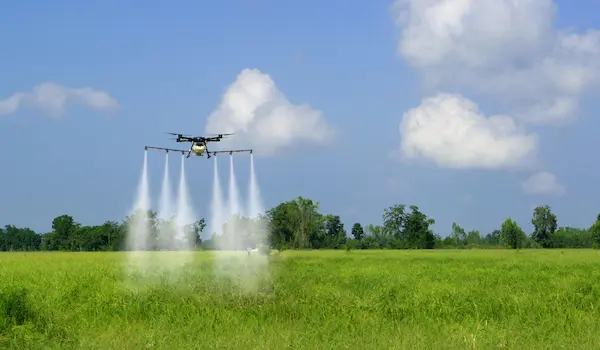
Farmers use exciting tools to help their crops today. One of the best tools is the agriculture drone. These drones fly over fields and help farmers in many ways.
Detailed Monitoring For Better Crops
Drones take close-up pictures of crops. With these pictures, farmers can see which parts of their fields are doing well and which parts need help.
This means they can use water, seeds, and other necessary things. Farmers get more crops from the same piece of land by doing this.
Checking Soil Health
Healthy soil is like a good home for plants. Drones can scan the soil to see if it’s healthy.
They check how wet or dry it is and what things are in it. The plants may not grow well if the soil is not healthy. With this information, farmers can take steps to make the soil better.
Field Analysis
Drones give farmers a big picture of their fields. They can see all parts at once. This helps farmers plan better.
They can decide where to plant different crops or where to add more water or nutrients.
Crop Scouting
Drones are changing the way farmers look at their fields. These flying machines give farmers a bird’s-eye view of their crops. This view is beneficial.
Drones help in spotting pests, diseases, and weeds early. Before, farmers had to walk around and look closely at each plant.
This took a lot of time. Now, with drones, farmers can see their whole field quickly. This means they can find problems faster.
With real-time monitoring, farmers can act quickly. Let’s say a drone spots a group of pests-eating plants.
The farmer sees this on the drone’s camera. He can act right away to stop the pests. This stops the problem before it gets big.
In the past, it was hard to see the whole field at once. Now, with drones, farmers can watch their crops all the time. This means healthier plants and more food for everyone.
Irrigation Monitoring And Management
Farmers always look for ways to grow healthy crops. One big way to help plants is to give them the right amount of water.
But, it’s not always easy to know how much water each plant needs. This is where drones come in.
Drones fly high in the sky. They have cameras and sensors. These tools help farmers see their fields from above.
Finding Water Problems
Drones help find places where water is too much or too little. They show which parts of the field have too much water.
They also offer which parts need more water. This helps farmers fix any water problems fast.
Checking Moisture Levels
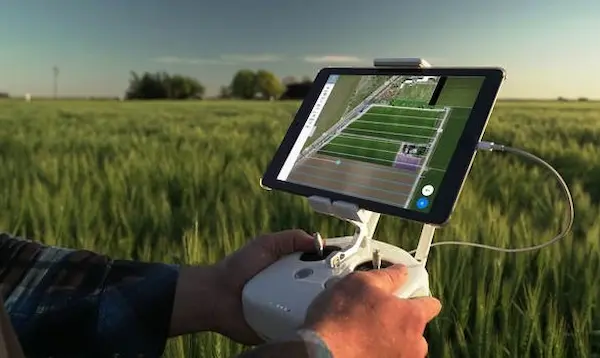
Plants need the right amount of water to grow. Drones can check how wet the soil is. They tell farmers if plants are getting too much water or not enough.
This means farmers can give plants just the right amount of water. Plants grow better this way.
Livestock Monitoring
Farmers have a big job. They need to watch many animals. Some animals may get lost.
It is not easy to find them. Drones can help! Drones fly in the sky. They have cameras.
Farmers use drones to look at their animals. They can see all their animals from the sky. This helps them find lost animals fast.
Drones also help keep animals safe. Farmers can see if an animal is sick. They can see if an animal is hurt.
Drones let farmers do this from far away. They don’t have to get close. This is good for the farmer. This is also good for the animal.
3D Terrain And Field Mapping
Drones are changing the game in farming. One of their most significant uses is 3D terrain and field mapping. With drones, farmers get detailed maps of their land.
These maps are like a bird’s eye view from the sky. They help farmers plan better and manage their crops in intelligent ways.
Think of the land as a giant puzzle. Some parts are flat, and some regions are hilly. Some areas might have too much water, and others might not have enough.
Drones can make a 3D picture of this puzzle. This 3D picture shows every hill, dip, and bump. Farmers can look at this picture and know where to plant crops.
But that’s not all. Drones also spot places where water might collect or where soil might wash away.
These are called drainage or erosion issues. By seeing these problems early, farmers can fix them. This means healthier crops and more food.
Advantages Of Implementing Drones In Agriculture
Using drones in agriculture is changing how farmers work and manage their fields. Drones bring many benefits, making farming easier and more efficient. Below, we explore these advantages in detail.
Cost Efficiency
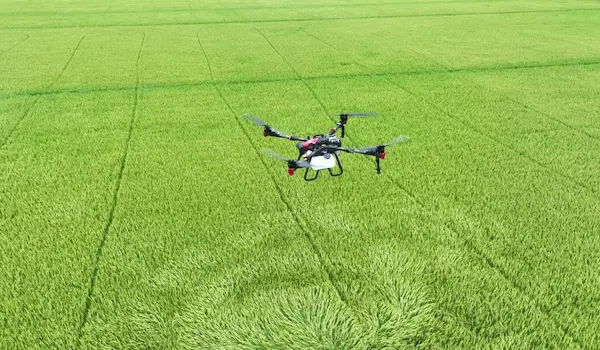
Drones help farmers save money. Before drones, farmers hired planes or helicopters to take pictures of their crops.
Now, a drone can do the job at a fraction of the price.
So, instead of spending a lot on expensive aircraft, farmers can use drones and keep more cash in their pockets.
Time-Saving
Drones are fast workers. A farmer can launch a drone, and in just a few minutes, it can scan a large field.
This means tasks that used to take hours now only take minutes. With drones, farmers get more time to do other important jobs.
Enhanced Data Accuracy
Drones are intelligent tools. They use cameras and sensors to collect data. This data is very accurate. For example, drones can show a farmer the exact spots where crops need more water. Farmers can make better choices and grow healthier crops with this clear and precise information.
Environmentally Friendly
Drones are suitable for the Earth. They don’t use a lot of fuel like big planes. This means they produce less pollution. Also, because drones give farmers accurate data, they can use fewer chemicals. This is better for the soil, the water, and all of us.
Crop Monitoring
Crop monitoring stands out as one of the most essential uses of drones in agriculture. Farmers use drones to fly over their fields and take pictures or gather data. This information helps farmers understand how their crops are doing.
For example, drones can spot areas where crops might be sick or need more water. By using drones, farmers can find and fix problems quickly, leading to healthier crops and better harvests.
Planting Seeds
Some drones can do more than take pictures; they can also help plant seeds. This is a newer use of drones, but it’s growing in popularity.
Drones can distribute seeds across a field, making the planting process faster and less labor-intensive. This method also allows for more precision in planting, which can lead to better crop yields.
Pest Control
Drones also play a vital role in managing pests on farms. They can spray pesticides or other treatments directly onto crops, targeting the areas that need it the most. This precision helps to use less pesticide, which is good for the environment and can save farmers money.
Additionally, using drones for pest control is often quicker and more efficient than traditional methods, helping to protect crops and keep them healthy.
Challenges And Considerations In Agriculture Drone Applications
Drones help farmers in many ways. However, using drones in farming is not always easy. There are challenges and things to think about.
Regulatory Concerns
Flying drones over farms sounds fun. But rules exist. You need a special license to fly a drone for farming in many places.
Sometimes, there are also limits on where you can fly. These rules make sure everyone stays safe.
But for farmers, they have to learn and follow these rules. They also need to keep up with any new laws that come out.
Data Overload
Drones collect a lot of information. They can see how healthy plants are. They can count how many animals are in a field.
But this is a lot of data! For a farmer, sorting through all this information can be challenging.
They may need special computer programs or extra help. This can take time and can be confusing.
Initial Investment
Drones can be costly. Some cost thousands of dollars. Plus, farmers may need to buy software or hire experts. This means spending money before seeing any benefits.
For some farmers, this big price tag can be scary. They wonder: Will the drone help enough to make it worth the money?
Conclusion
Drones have truly changed farming. With these flying tools, farmers can look at large land areas quickly.
They can see where crops are thirsty, sick, or need more care. Because of drones, farmers can make fast decisions and grow healthier food.
In numbers, many farmers have found that using drones can boost crop health by up to 10%.
That’s a big win for everyone! So, the next time you see a drone above a farm, know it’s working hard to improve our food.