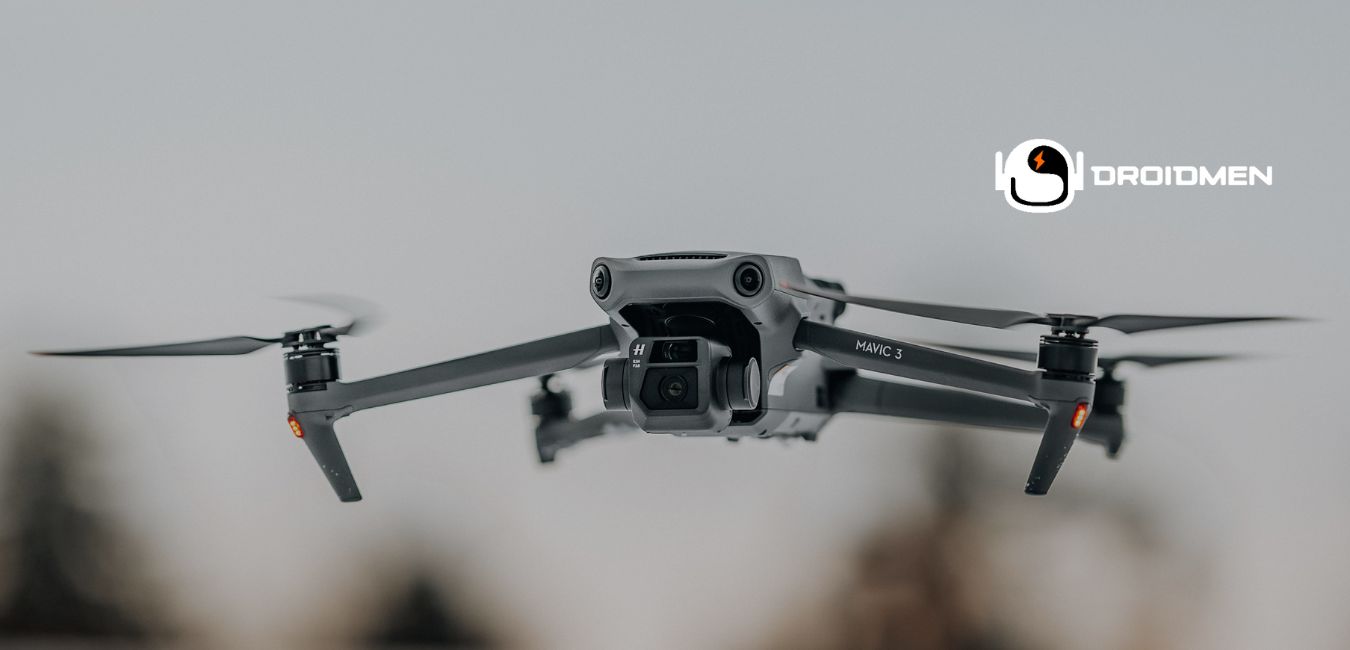
Drones have become increasingly popular over the years, and there’s no denying that they are cool gadgets to have. While some drones are just glorified toys, others are perfect for imaging and cinematic applications, both large and small. The good news is that drone technology has come a long way in a very short time. Some of the models available now can put earlier copters to shame in terms of video quality and stabilization.
However, the bad news is that drones can be quite costly, and if you want an aerial video platform that can capture stunning footage, you need to spend some cash, anywhere from a few hundred to a few thousand dollars. Because drones are such expensive investments, it’s essential to do your research before buying one. In this article, we’ll review some of the best drones for imaging and video, ready-to-fly models that you can use right out of the box.
Table of Contents
DJI Mini 2 SE: Best Entry-Level Drone
The DJI Mini 2 SE is the best drone you can get for less than $350. It sports a stabilized 2.7K video camera that also snaps 12MP photos, as well as includes GPS and Find My Drone functions. Its 249g takeoff weight means you can fly it without dealing with FAA registration—you just need to pass an online knowledge test. We also like the Mini 2 SE’s nearly half-hour flight times, stable performance at its 400-foot altitude limit, and reliable connection to the required smartphone app. We just wish DJI had managed to build-in obstacle-detection sensors.
The Mini 2 SE is perfect for those who are just starting out and want to record ultra-smooth 2.7K30 footage from the air. Raw format imaging is also available for photogs who like to post-process.
Pros
- Doesn’t require FAA registration
- Palm-sized, lightweight design
- Produces silky smooth 2.7K30 video
- Around 30 minutes of flying time per charge
- USB-C charging for drone and remote
Cons
- Omits obstacle detection and Hyperlapse features
- SDR video profile is limiting for some scenes
DJI Mini 3 Pro: Best Drone for Most Creators
The DJI Mini 3 Pro is the most capable ultralight drone on the market. Its 249g takeoff weight (with a 34-minute battery) means you can get around FAA registration, though creators who don’t mind forms and fees can add in an extended life battery to push flights beyond 45 minutes. Three-way obstacle sensors, automated flight modes, and 4K60 video round out the feature set. We especially like the APAS function, an autopilot that can navigate through complex spaces all by itself, for low-to-the-ground use.
The Mini 3 Pro is a sensible step-up for those who want a bit more than the Mini 3. Drone enthusiasts, cinematographers looking to add a B-camera for aerials, and creators who don’t mind spending a bit more for smart obstacle avoidance should find the Mini 3 Pro to be a worthwhile upgrade. It’s also a good match for TikTok influencers because it supports vertical 9:16 video.
Pros
- Portable design
- 4K60 with digital zoom
- Vertical video and photo support
- Upward-tilting camera
- Three-way obstacle sensors
- Strong safety features
- Two remote control options
Cons
- Extended battery should be standard
- GPS lock-on takes some time
- Omits AirSense ADS-B system
DJI Air 2S: Best for Photographers
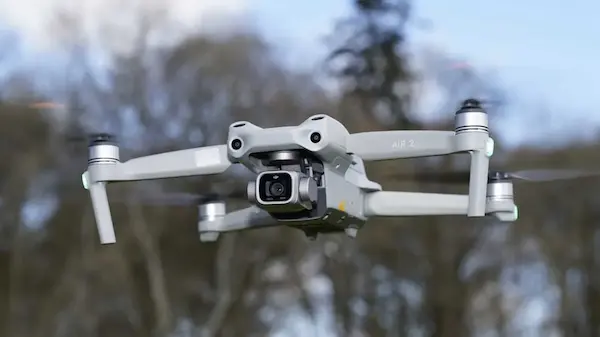
The DJI Air 2S has a camera with an oversized Type 1 (also called 1-inch) sensor for much better 20MP stills than you can get from the DJI Mini series drones. It supports 5.4K30 and 4K60 video with HDR, flat, or standard profiles, plus it can snap photos in Raw or JPG format. DJI’s strong safety features are here too, including GPS location, obstacle sensors, ADS-B to warn you of nearby manned aircraft, and a 30-minute battery.
The Air 2S is a compelling drone for stills-first creators. The Type 1 sensor may lag behind Quad Bayer chips in pixel count, but captures a wider dynamic range, so photogs have more leeway for edits to exposure. Video pros should appreciate the 5.4K resolution and choice of three profiles too, but you may want to step up to a Mavic 3 for more serious cinema work. Keep in mind that you must register this drone with the FAA.
Pros
- 1-inch sensor camera
- Video at up to 5.4K quality
- Robust safety features
- Obstacle detection and avoidance
- Automated camera shots
- HDR, Log, and Standard video profiles
- AirSense transponder
- Half-hour flight time
Cons
- Doesn’t offer in-camera filtered looks
- 8GB internal storage isn’t much
- Remote doesn’t include EV control wheel
- App-based editing limited to 1080p output
- HDR HLG workflow for pros only
- Raw images don’t transfer to smartphones and tablets automatically
DJI Mavic 3 Pro: Best Drone for Pro Video and Cinema
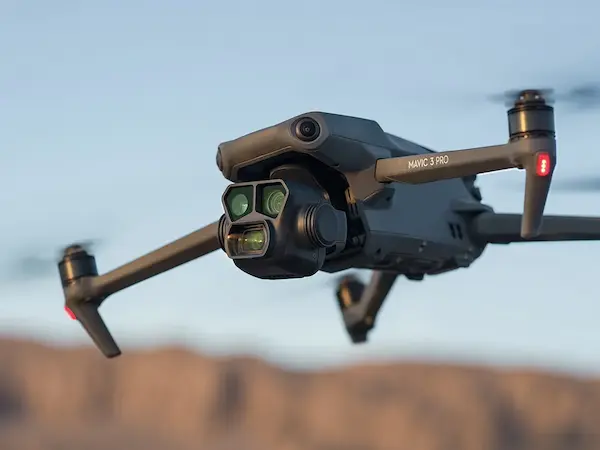
The DJI Mavic 3 Pro’s big Four Thirds format sensor with a Hasselblad color profile delivers class-leading footage and stills straight out of the camera. All-around obstacle sensors allow the drone to easily bypass obstructions; an integrated GPS keeps it steady in the air; and 35-minute flying times (in testing) make for safer flights. Film producers can upgrade to the Pro Cine ($4,799) edition to get a 1TB SSD, ProRes 422 video support, and the RC Pro remote, while anyone on a budget can opt for the $1,599 Classic edition, which drops the telephoto cameras and internal storage.
The Mavic 3 Pro is ideal for cinematographers, indie filmmakers, vloggers, and other creative professionals. It’s heavy enough to require FAA registration, and you need an operator’s license to use it for paid projects, but it’s still easy to bring along for location work.
Pros
- Stabilized, triple-camera array
- Wide-angle Four Thirds camera with Hasselblad color
- Midrange 3x lens shows excellent picture quality
- Up to 5.1K30 or 4K120 video
- All-around obstacle sensors
- Includes a companion app and a remote with a built-in screen
Cons
- Base model has just 8GB of onboard storage
- Falls shy of promised 43-minute flight time
- Only the pricey Cine model supports ProRes
DJI Mini 3: Best for Creators on a Budget
The DJI Mini 3 is the drone for pilots who aren’t satisfied with the starter camera on the affordable DJI Mini 2 but can’t quite justify the Mini 3 Pro. Highlights of the camera include support for 4K30 video with an HDR look in either vertical or landscape orientation, as well as 60 degrees of upward tilt. The photo quality is good, too.
The camera supports 12MP JPG or Raw DNG snaps, while the F1.7 optics do a good job at dawn and dusk. Safety features include GPS, Find My Drone, and Return to Home. Its 249g takeoff weight means you can fly it without dealing with FAA registration—you just need to pass an online knowledge test. We also like the 38-minute flight times, though we wish DJI had worked obstacle detection into this model.
Creators who want a dual-aspect drone for TikTok and YouTube should consider this drone. It conveniently streams live video straight to a smartphone app, is capable for stills, and remains stable even when you fly it near the 400-foot altitude limit. If you don’t want to spend quite so much ($560 with a remote), the Mini 2 is the best alternative. On the other hand, if you can spend more, the Mini 3 Pro adds useful obstacle avoidance sensors.
Pros
- Good-looking 4K30 video
- Support for vertical video and upward gimbal tilt
- 12MP stills in Raw DNG or JPG
- 38-minute flights with standard battery
- 51-minute extended battery available
- 249g build for registration-free flight
- Built-in GPS and FlySafe safety features
Cons
- Omits obstacle detection
- Limited to one color profile
- Doesn’t support Hyperlapse or ActiveTrack
Autel Robotics Evo Lite+: Best for Long Flights
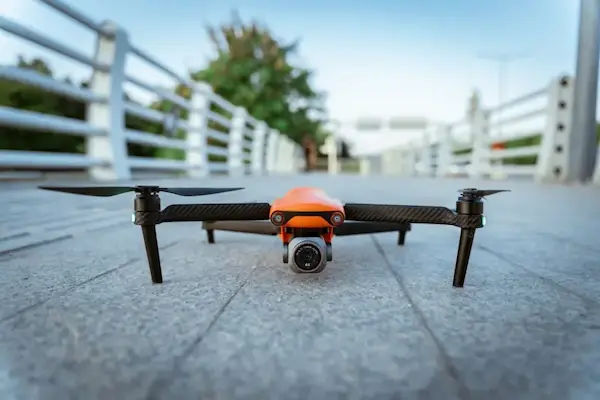
The Autel Evo Lite+ uses a Type 1 sensor camera for picture quality that’s competitive with the DJI Air 2S, with the additional benefit of a variable aperture to cut incoming light without the need for ND filters. The folding drone can fly for around 40 minutes on a full battery and supports three-way obstacle sensors to prevent midair accidents.
The Autel Evo Lite+ is a capable camera drone for creators who don’t want to support DJI. Its 6K camera is capable, and although we wish we could fine-tune the video profile, a flat look is available if you want to edit for color.
Its price is a knock against it, though, considering the Air 2S costs around $1,000, but you might find the Lite+ to be worth it for extended flight times and to sidestep DJI’s sometimes restrictive Fly Safe geofence.
Pros
- Stabilized 6K30 and 4K60 video
- 20MP stills in Raw DNG or JPG
- 1-inch camera with variable aperture
- Beefy battery for up to 40 minutes of flight
- Three-way obstacle sensors
- Automated camera moves and Hyperlapse
- GPS and automated return-to-home
Cons
- Color video profile isn’t configurable
- 8-bit flat video profile
- Screen less remote is a step backward from previous generation
- Doesn’t support autonomous navigation around obstructions
Autel Robotics Evo Nano+: Best 249g Drone Without Geofence
The Autel Robotics Evo Nano+ comes in at 249g, so you don’t need to register it with the FAA, though it does include three-way obstacle detection for safer flight. A stabilized camera records 4K30 video and snaps sharp photos at up to 50MP. Battery life is very good too, at about 28 minutes.
The Evo Nano+ is a good drone for pilots who want a quadcopter they can take up in the air without