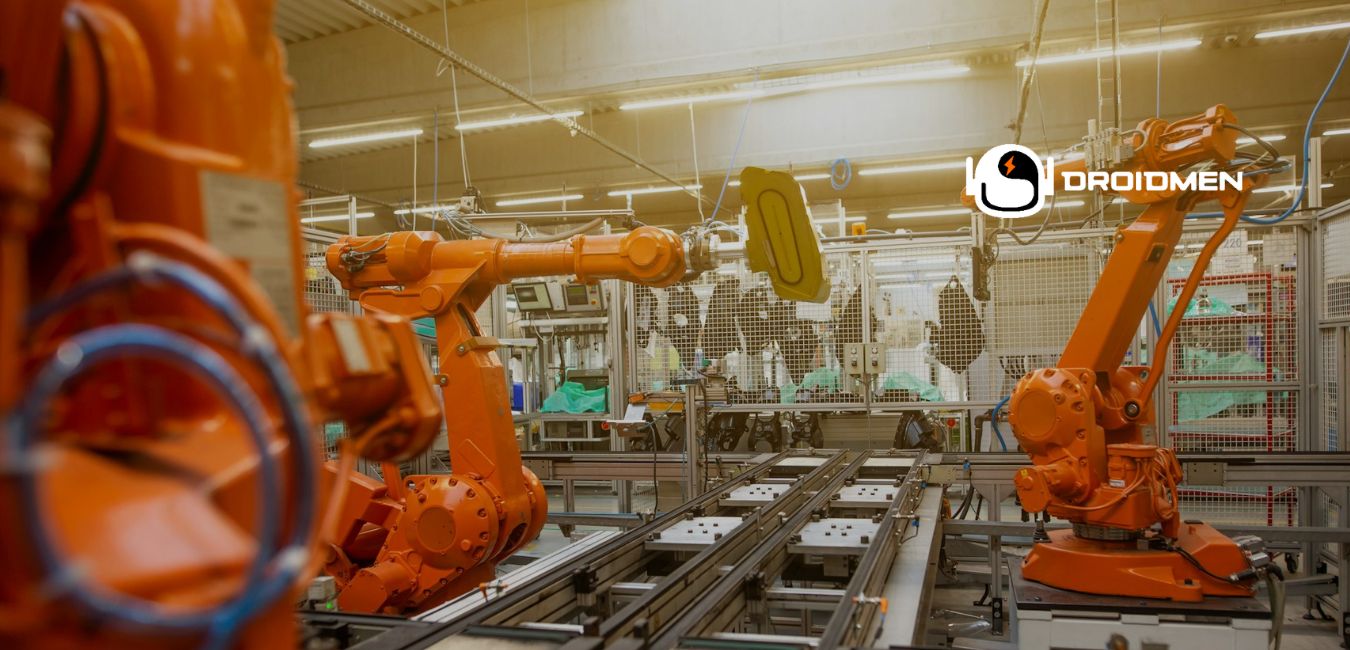
Robotics has transformed the way industries approach manufacturing, logistics, healthcare, and countless other applications. Behind the smooth, accurate movements of robotic systems lies a critical technology that often goes unnoticed: encoders. Encoders play a vital role in helping robots understand position, speed, direction, and movement, allowing them to operate with incredible precision and reliability.
As automation continues to evolve, the relationship between encoders and robotics is becoming even more important for businesses seeking improved productivity, consistency, and efficiency.
Table of Contents
What Are Encoders?
Encoders are sensing devices that convert motion into electrical signals. These signals provide feedback to robotic control systems, helping machines determine exactly where components are located and how they are moving.
In robotic applications, encoders are commonly used to monitor:
- Rotational position
- Linear movement
- Speed
- Direction
- Acceleration
Without encoder feedback, robotic systems would struggle to perform precise tasks consistently.
There are two primary types of encoders commonly used in robotics:
Incremental Encoders
Incremental encoders generate pulses as movement occurs. The robotic controller interprets these pulses to measure speed, position changes, and direction. These encoders are popular because they are cost-effective and work well in many industrial automation environments.
Absolute Encoders
Absolute encoders provide an exact position value at all times, even after power loss. This makes them ideal for robotics applications where maintaining precise positioning is critical.
Why Encoders Matter In Robotics
Modern robotics relies heavily on real-time feedback. Encoders serve as the communication bridge between robotic motion and the control system, ensuring movements remain accurate and repeatable.
Precision Movement Control
Robots often perform tasks that require extremely fine positioning, such as assembling electronics, welding components, or conducting surgical procedures. Encoders provide the positional feedback needed to maintain tight tolerances and smooth motion control.
Improved Automation Efficiency
Encoder-equipped robotic systems can operate faster and more accurately than systems lacking precise feedback. This helps manufacturers reduce waste, improve cycle times, and maintain higher production consistency.
Enhanced Safety
Many robotic systems work alongside human operators. Encoders help ensure robotic arms and automated machinery move predictably and safely by continuously monitoring motion and positioning.
Reduced Downtime
Accurate feedback allows robotic systems to identify positioning errors or motion irregularities before they become larger mechanical issues. This can help minimize downtime and reduce maintenance costs.
Common Robotics Applications For Encoders
Encoders are used across a wide range of robotic technologies and automated systems.
Industrial Robotic Arms
Industrial robots rely on encoders to coordinate arm movement, joint rotation, and tool positioning. These systems are commonly used in:
- Automotive manufacturing
- Packaging facilities
- CNC automation
- Material handling
- Electronics assembly
Autonomous Mobile Robots (AMRs)
AMRs use encoders to track wheel movement and navigation. Accurate motion feedback helps these robots move safely through warehouses and production environments.
Collaborative Robots (Cobots)
Cobots work directly alongside humans and require highly responsive motion control systems. Encoders help ensure smooth, safe, and precise operation in shared workspaces.
Medical Robotics
In healthcare applications, robotic systems require extremely accurate positioning. Encoders support delicate procedures by providing real-time positional data for robotic-assisted surgeries and laboratory automation systems.
Key Considerations When Choosing Encoders For Robotics
Selecting the right encoder depends on the demands of the robotic application.
Accuracy Requirements
Applications involving precision assembly or advanced automation may require higher-resolution encoders for better positional accuracy.
Environmental Conditions
Industrial environments may expose encoders to dust, vibration, moisture, or temperature extremes. Choosing rugged encoder designs can improve long-term reliability.
Speed And Responsiveness
High-speed robotic systems require encoders capable of delivering fast and accurate feedback without signal delays.
Communication Compatibility
Modern robotics systems often integrate with advanced industrial networks and controllers. Encoder compatibility with the broader automation system is an important consideration.
The Future Of Encoders In Robotics
As robotics and automation technologies continue to advance, encoder technology is evolving alongside them. New encoder innovations are helping robotic systems become more intelligent, efficient, and adaptable.
Emerging trends include:
- Higher-resolution feedback systems
- Improved miniaturization
- Enhanced wireless communication
- Better integration with AI-driven robotics
- Increased durability for harsh environments
These advancements are helping industries push automation capabilities further than ever before.
Supporting The Next Generation Of Robotics
Encoders are one of the foundational technologies powering today’s robotic systems. From industrial automation to advanced medical robotics, these devices provide the precision and feedback needed to keep automated systems operating efficiently and accurately.
As robotics adoption continues to grow across industries, reliable encoder technology will remain essential for achieving the speed, safety, and precision modern automation demands.