Drones have evolved far beyond recreational gadgets. Today, they serve critical roles across industries like filmmaking, agriculture, energy, defense, and environmental monitoring. With capabilities such as LIDAR scanning, 8K cinematic recording, and thermal imaging, high-end drones come with high price tags to match. In this comprehensive guide, we explore the most expensive drones in the world—what makes them cost so much, who uses them, and how they are transforming industries.
Table of Contents
What Defines An Expensive Drone?
Expensive drones are typically defined by:
- Payload capacity (often 5–20+ kg)
- Advanced sensor suites (e.g., multispectral, thermal, LIDAR)
- Cinematic-grade cameras
- Extended flight time (30–60 minutes)
- Redundancy systems for safety in industrial settings
- Precision navigation (RTK GPS, AI tracking)
These are not your average hobbyist UAVs—they are tools of the trade for professionals.
The Top 7 Most Expensive Drones In 2025
| Drone Name | Price | Key Features | Primary Use |
| Freefly Alta X | $15,995+ | 35 lb max payload, modular, industry-standard for cinema | Film Production, Heavy Payloads |
| DJI Matrice 300 RTK | $13,200 | RTK GPS, LIDAR support, 55-min flight, AI inspection tools | Surveying, Inspection, Public Safety |
| Augmented Aerigon MK II | $25,000+ | Cinema camera support (RED, ARRI), carbon-fiber frame | High-End Cinematography |
| Ehang 184 AAV | $200,000+ | Autonomous passenger drone | Personal Transport, Future Mobility |
| DJI Inspire 3 | $16,499 | Full-frame 8K camera, RTK GPS, 28-min flight time | Professional Filmmaking |
| Quantum Systems Trinity Pro | $20,000+ | VTOL fixed-wing, 90-min flight, multispectral options | Agriculture, Mapping, Defense |
| Lockheed Martin Indago 3 | $25,000+ | MIL-SPEC grade, encrypted comms, ISR capability | Military, Search & Rescue |
In-Depth Look At The Most Expensive Drones
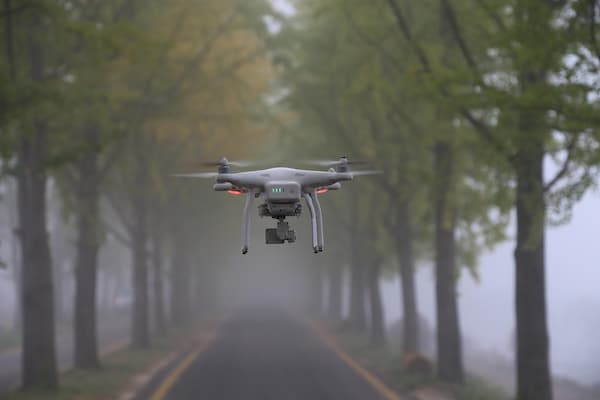
1. Freefly Alta X
- Why It’s Expensive: Supports 35 lbs of payload, built for heavy-lift cinema rigs.
- Use Case: Hollywood studios, industrial inspections.
- Key Specs: Modular design, 50-minute flight, customizable payloads.
2. DJI Matrice 300 RTK
- Why It’s Expensive: Industrial-grade with AI, thermal, and LIDAR compatibility.
- Use Case: Utilities, infrastructure, agriculture.
- Key Specs: 6-directional sensing, hot-swappable batteries, IP45 weather rating.
3. Augmented Aerigon MK II
- Why It’s Expensive: Designed to lift cinema-grade cameras like RED Helium.
- Use Case: Precision film work.
- Key Specs: Gimbal stabilization, 3-axis control, 6–8 rotor configurations.
4. Ehang 184
- Why It’s Expensive: Autonomous aerial vehicle that can carry a person.
- Use Case: Future mobility, government transport pilot programs.
- Key Specs: Autonomous control, 62 mph, 23-min flight.
Why Do These Drones Cost So Much?
1. Advanced Hardware
Carbon fiber frames, dual-IMU systems, AI-enhanced navigation, and interchangeable camera mounts drive up hardware costs.
2. Industry-Specific Features
From LIDAR to RTK GPS and thermal cameras, each drone is purpose-built to solve unique challenges.
3. Certification & Compliance
Many drones must pass stringent aviation regulations, adding cost through safety and firmware systems.
4. R&D And Software
Flight management software, SDKs for automation, and mission planning tools are costly to develop and maintain.
Use Cases: Real-World Applications
Film & Media
- Inspire 3 and Alta X are commonly used by major studios.
- Example: Films like Mission: Impossible use drones for tight aerial tracking shots.
Agriculture
- Quantum Trinity Pro helps with NDVI analysis, crop health mapping.
- Precision agriculture improves yield prediction and minimizes waste.
Industrial Inspection
- Drones like the Matrice 300 RTK inspect pipelines, power lines, and cell towers.
- Example: Shell Oil uses drones for offshore rig inspections to reduce human risk.
Military & Rescue
- The Indago 3 is deployed for ISR missions.
- Drones equipped with infrared cameras help locate missing persons in disaster zones.
Legal & Ethical Considerations
Regulatory Compliance
- Commercial drone operators require certifications such as Part 107 (U.S.).
- Drones must adhere to airspace restrictions and flight altitude limits.
Privacy & Surveillance
- High-end drones can violate privacy due to zoom and thermal imaging.
- Legal frameworks often lag behind drone capabilities.
Environmental Impact
- Operators must avoid disturbing wildlife.
- Example: Drones in conservation are great tools—when used responsibly.
Buying Tips For High-End Drones
1. Define Your Use Case
Cinematography? Agriculture? Surveillance? Don’t overpay for features you don’t need.
2. Total Cost Of Ownership (TCO)
Account for batteries, spare rotors, licensing, insurance, maintenance.
3. Upgrade Potential
Some models are modular or support third-party payloads (e.g., gimbals, sensors).
4. Support & Warranty
Choose vendors offering long-term support, firmware updates, and training.
Frequently Asked Questions On The Most Expensive Drones In The World
1. What Is The Most Expensive Consumer Drone?
The DJI Inspire 3 is one of the priciest consumer-accessible drones, retailing around $16,499. It regularly features in lists of the most expensive drones in the world for personal and commercial use. This model is especially popular among professional filmmakers and aerial cinematographers due to its ability to capture 8K footage, use swappable lenses, and provide real-time video feeds.
2. Are Military Drones Available To The Public?
No. Drones like the MQ-9 Reaper cost upwards of $30 million and are military-restricted. These drones are classified as military-grade equipment and cannot be purchased or operated by civilians. They are equipped with advanced surveillance, navigation, and combat technologies that fall under strict government export controls.
3. Can Drones Fly In The Rain?
Some high-end drones (e.g., Matrice 300 RTK, Freefly Alta X) have IP-rated weather resistance, but not all are waterproof. Rain presents challenges to both electronics and flight stability. If a drone is IP-rated (e.g., IP45 or higher), it can typically handle light rain, mist, or snow. However, flying in heavy precipitation can damage sensors or compromise GPS signals.
4. Do You Need Insurance For Expensive Drones?
Yes. Commercial insurance is recommended and sometimes required by law or clients. Insurance can cover a range of risks, including accidental damage, liability for injury or property damage, theft, and even loss of signal. Policies vary by provider and region, but anyone using drones for professional or industrial work should consult a broker familiar with UAV operations to ensure adequate coverage.
Final Thoughts
The market for expensive drones is growing rapidly, driven by industrial demand and rapid tech innovation. Whether you’re shooting IMAX footage or surveying farmland, these elite UAVs offer capabilities far beyond recreational drones. As drone laws evolve and technology advances, expect even more powerful, autonomous, and costly models in the near future. Anyone searching for the most expensive drones in the world will find these aircraft at the forefront of aerial innovation and performance.
If you’re investing five or six figures into a drone, think of it as you would a workhorse or a film crew—the ROI isn’t just in flight time but in the problems it can solve.